

Africa Set for Record Solar Boom as Distributed Power Drives 17 GW of New Capacity
- Posted on August 31, 2026
- Latest News
- By Admin
- 69 Views
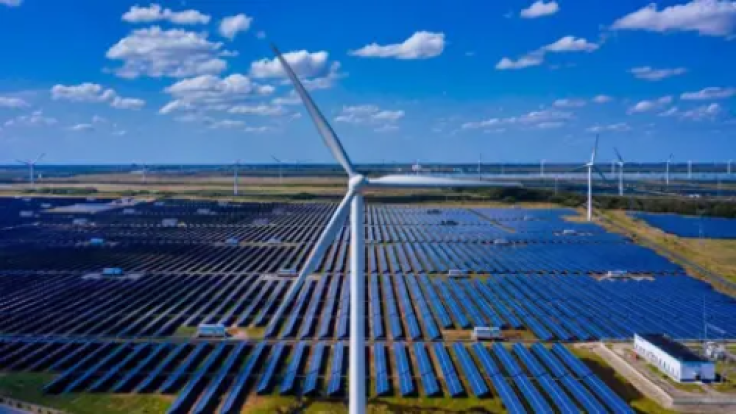
Africa is on track to install a record 17 gigawatts of solar power in 2026, a 45% increase from 2025, as distributed solar expands rapidly across the continent, according to a new analysis by energy think tank Ember and the African Tech Futures Lab.
The analysis, published August 27, estimates that Africa is on course for a third consecutive record year for solar installations, with growth increasingly shifting beyond the continent’s traditional solar markets.
Thirty-six of Africa’s 54 countries are expected to install record amounts of solar this year, while 19 countries are projected to more than double their solar installations from 2025.
The Democratic Republic of Congo is expected to record the fastest growth, at 544%, followed by Zimbabwe at 282% and Egypt at 176%.South Africa, which once accounted for more than half of Africa’s solar imports, is expected to represent less than one-fifth of the continent’s installations in 2026 as solar deployment expands into new markets.
The growth comes as Africa continues to face a major electricity-access gap. Nearly two out of every five people on the continent , about 600 million people still lack access to electricity, according to the International Energy Agency.
New methodology captures hidden solar growth
The analysis uses a new methodology that tracks Chinese customs export data to individual African countries and applies an installation rate based on solar deployment patterns in the European Union and five other markets.
The researchers found that about 73% of solar panels exported to those markets are typically installed within six months. Because Chinese export data is available through June 2026, the methodology allows researchers to estimate full-year solar installations before official national statistics become available.
Dave Jones, chief analyst at Ember, said the declining cost of solar technology is encouraging businesses and individuals across Africa to adopt solar, but governments risk underestimating the scale of the transition because of weak data collection.
“Solar panels have become so cheap, the economics are compelling. But so much of this growth is hidden from view national governments need to get better at gathering solar data,” Jones said.
He said countries were already moving toward faster, more secure and cleaner energy systems and that governments that respond early could benefit from the transition.
Solar growth could match rising electricity demand
The additional solar capacity expected to be installed in 2026 could generate about 23 terawatt-hours of electricity annually, enough to match Africa’s average annual increase in electricity demand over the past decade, according to the analysis.
In more than half of Africa’s 54 countries, solar generation is expected to grow faster than the historic rate of electricity demand.
The analysis also estimates that Africa’s solar-panel manufacturing capacity will quadruple in 2026 to about 3.5 GW, driven by new plants in Egypt and Tanzania.
But most of the continent’s manufacturing output is expected to be exported to the United States, while 94% of the solar panels installed across Africa are still imported from China.
The researchers caution that solar manufacturing data remains limited, with little information available from governments and other public sources.Only three African countries South Africa, Tunisia and Tanzania currently publish solar-capacity data quarterly or more frequently, according to the analysis.The gap makes it difficult for policymakers, grid operators and regulators to accurately assess the scale and pace of the continent’s changing energy market.
Joel Nana, research director at African Tech Futures Lab and project manager at Sustainable Energy Africa, said the rapid expansion of distributed energy resources is challenging traditional approaches to electricity planning.
“Across Africa, distributed energy resources are rapidly expanding, and in many cases, overtaking grid capacity. This transition is chaotic and disruptive, and far from the orderly model planned in national strategies. Policymakers need to start responding to this shift,” he said.


Write a Response