

Uganda’s Conservation Efforts Face Fierce Resistance From Indigenous Benet Around Mount Elgon National Park.
- Posted on December 1, 2025
- Latest News
- By Admin
- 1176 Views
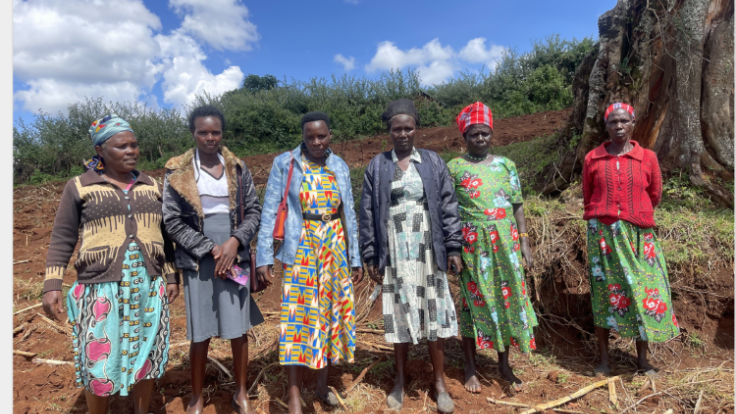
The Benet, a minority tribe of around 12,000 people, insist that part of the 1,121 square kilometers of forest in the national park occupies their ancestral homelands.
By Diana Taremwa Karakire
Kween District, Uganda
This story was produced with a grant from Akina Mama Wa Afrika
In the mist-wreathed highlands of eastern Uganda lies a massive solitary mountain range. Its highest point, locally known as Wagagai, and its forested surroundings is the latest front line between an indigenous community fighting to protect their ancestral land and the government trying to preserve one of its last remaining natural forests .
For many years, the indigenous Benet people inhabited the forest and moorland areas of Mt.Elgon,the largest extinct volcanic mountain range along the Uganda-Kenya border however,in 1992, the Ugandan government changed the status of the forest reserve to a national park evicting and displacing them to the lower belt of the mountain. Subsequently, the community lost their ancestral land which sparked off a decade’s long feud over the land.The Benet, a minority tribe of around 12,000 people insist that part of the 1,121 square kilometers of forest occupies their ancestral homelands.
But since Uganda WildLife Authority UWA, the government agency responsible for nature conservation in Uganda embarked on a latest attempt to demarcate the boundaries of the national park a decade ago (2014),areas around the forest have erupted into scenes of violent confrontations, in clashes that have left more than a dozen people dead.
“We are living in fear, the government should think about rescuing us from this miserable life” Sarah Kokop, a mother of eight who lost a brother during one of the clashes with UWA game rangers five years ago. “If they chase us from here, where will I go” Many locals like Kokop live in a settlement on the fringes of the national park after being uprooted in the first bout of evictions in 1998.Community members are fearful of UWA rangers,who they accuse of committing several atrocities against locals.
The Benet say that government seems not interested in settling the land wrangles, which date as far as the early 1920s, when the British colonial government gazetted the forest, without consulting indigenous inhabitants. Back then, the Benet were a small community of just hundreds of families, whose basic livelihoods rotated around pastoralism, fruit-gathering and hunting. For generations, their small population appeared not to bother authorities, as they peacefully co-existed in the protected forest with the wild life.
In recent decades however, their swelling numbers have forced authorities keen at conserving Uganda’s dwindling forest cover, which has shrunk by 23% over the past two decades to push them out, setting a stage to one of the most contested relocations in Uganda’s history.

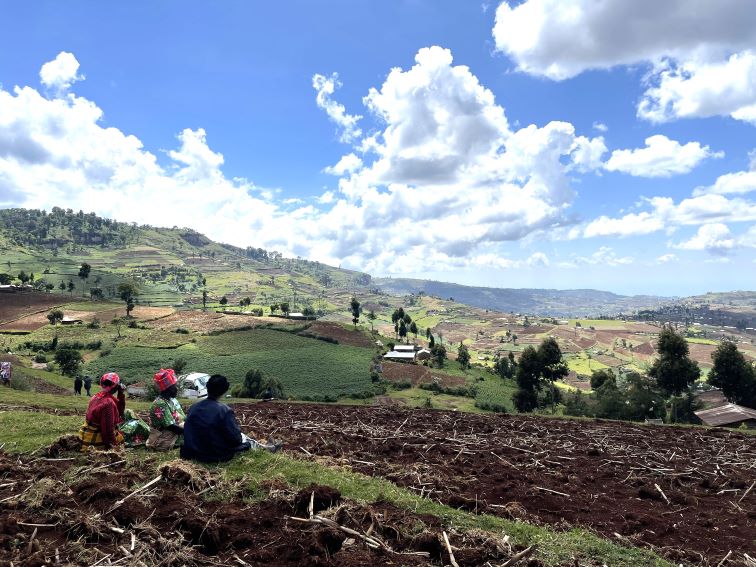
The Benet live on the lower belt of Mt Elgon photo by Diana Taremwa Karakire
“Mt. Elgon National Park has several conflicting boundary markers dating back to the 1940s, 1980s, and 1990s, which has created confusion and tension between communities and park authorities,” said Agnes Kabajuni, the Africa Managing Director of the civil society group Minority Rights Group, in an interview.Kabajuni says that authorities are supposed to implement a 2005 consent judgement, in which the Benet won the right to remain in the forest part of the park. The ruling arose from a 2004 suit, brought by the Benet Lobby Group backed by the Uganda Land Alliance, which sought to resolve the land dispute.The ruling, issued by high court judge, Justice J. B. Katutsi then recognized the Benet as the indigenous occupants of Mount Elgon.
“Government has never respected this ruling yet the attorney general and UWA were all part of the consent ruling,” Kabajuni says “Community members were duped, many are suffering violent attacks, and this should not be allowed to continue”
Interviews with local community members show that the land issue is highly politicised. Politicians usually recommend solutions to the land dispute during election years, which are never implemented after the election cycle. The 2005 consent judgement was reached a year before the 2006 elections but was quickly abandoned.
Speaking at a recent campaign rally in Kween and Kapchorwa Districts, President Yoweri Kaguta Museveni—who has been in power since 1986 renewed his pledge to resolve the long-standing boundary disputes affecting the Benet community and promised to find a lasting solution.He promised that, if re-elected in 2026, government would compensate and resettle those evicted from the catchment areas. Museveni emphasized that the mapping of Mount Elgon National Park will rely on technical expertise rather than political or local pressures. “The boundary should be guided by science, not opinion,” he said.He also condemned the beating of locals by UWA officials during evictions.
According to David Mande the coordinator of the Benet lobby group , government has not followed through on past promises to reopen the boundaries,reflecting a broader failure to take decisive action. “It’s just politics without political will,” he says adding that the continued politicization of the issue shifts attention away from substantive, rights based solutions and toward electoral interests and political rhetoric.
Who are the Benet
The Benet Mosopsiyek, also referred to as the Ndorobo, are an ethnic minority group found in Uganda’s Mount Elgon region, particularly in the districts of Bukwo, Kween, and Kapchorwa. According to the Uganda National Bureau of Statistics, they have an estimated population of over 12,000 people. The Benet traditionally practise a mixed livelihood system that includes both farming and pastoralism.
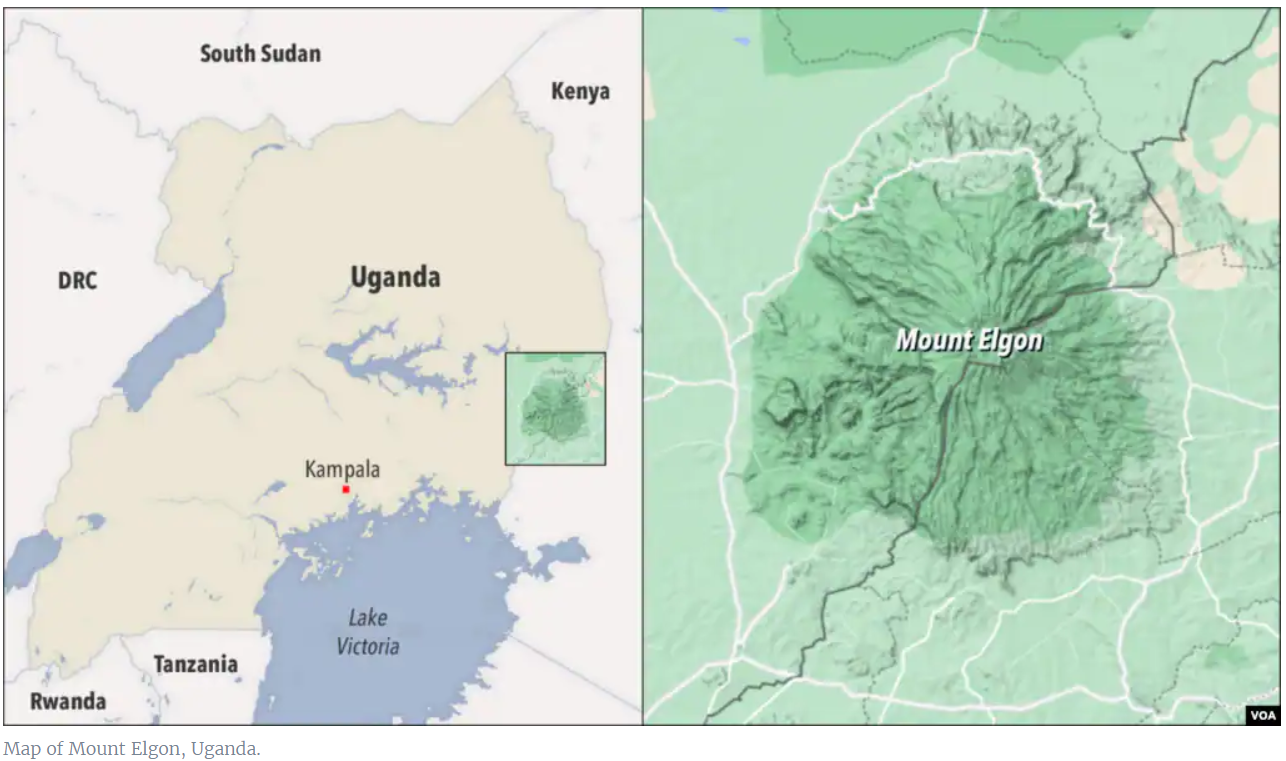
Map of Mt Elgon ,Uganda - Source VOA
The Mount Elgon National Park covers 1,121 square kilometres, including 49,382.9-hectare forest that the Benet consider their ancestral land. Today, however, UWA has barred them from accessing the forest, disrupting their livelihoods,daily activities,cultural practices, and rituals. These include; fruit gathering, grazing, beekeeping, hunting, and the collection of traditional herbs such as kwalet, bulyongok, sisimwet, and others used for medicinal purposes.“The forest is rich in plants that our people have long used for traditional healing including easing labour pains for pregnant mothers. But we can no longer obtain these plants,” said Mande.
Also,several cultural sites are no longer accessible, including Ceenyitwa, a cave where the dry bones of deceased ancestors were kept, and Kapkworos, a sacred place where offerings and sacrifices were made to the gods.
In normal times, the Benet grow potatoes and vegetables around the fertile highlands of Elgon ,that supply markets in Kapchorwa and help feed the district’s half a million residents.But frequent confrontations with rangers has disrupted the community’s daily life activities.
“We want the government to allow us to return to our ancestral home; we are not willing to go anywhere else. We know where our land is,” said Cheptoek Francis, who heads the Benet council of elders. “The Benet are better at taking care of the forest than UWA.We lived there long before anyone else.”
Experts warn that the ongoing disputes with communities living along the edge of the park risks undermining the conservation and protection of the area.
“If People are pushed out they will not attach good value to these areas, it will instead lead to more destruction and degradation,” Andrew Byaruhanga, the executive director at Resource Rights Africa told Indigenous Times. “The Benet have been pushed on the fringes of the protected area”
Series of deadly clashes
Locals report severe human rights abuses by UWA rangers, including shootings, beatings, and even killing locals found grazing or collecting firewood near the park.As recently as June 2025, UWA rangers reportedly shot 25 year old Kibet Emmanuel who was found grazing cows near the park boundary. He was later rushed to Mbale hospital in critical condition.
.png benet.png detail.png)
Source: Benet Mosop Indigenous Community Association
In September 2024, UWA rangers reportedly shot and killed a primary school student who was harvesting firewood. Earlier, on 10 February 2023, a 45-year-old man was shot dead after rangers found him collecting firewood in Mt. Elgon forest. On 28 December 2022, a 16-year-old Benet Mosop girl was raped by a UWA agent.A summary record compiled by the Benet Mosop Indigenous Community Association BMCA indicates that approximately 52 residents have been shot dead by rangers since 2002, while community members estimate the total death toll from various evictions to be around 100.
“The gazetted land formed the basis of our livelihoods as hunters, gatherers and cattle keepers,” says Chemutai. “But frequent arrests of community members found grazing nearby the park has forced many to quit cattle keeping and adapt to subsistence agriculture.”
The Uganda Wildlife Act, 2019 is the primary law that governs conservation and management of wild animals and plants in the country. While the Act provides for community involvement in conservation including equitable sharing of benefits it also imposes strict punitive measures on local communities. For example, domestic animals that stray into conservation areas can attract fines of up to UGX 7 million about USD 2,100, up to 10 years in prison, or both.
These harsh penalties have fueled ongoing conflict between the Benet and UWA particularly in areas where communities lack sufficient land to graze their cattle. They have also created opportunities for corruption, with community members reporting that UWA rangers sometimes demand bribes to avoid prosecution.Despite these risks, locals continue to enter the park, where traditions of grazing and hunting long predate Uganda’s wildlife laws.
“Given the way they’re treated, it’s frankly not surprising that they “poach” if the opportunity arises, UWA’s Conservation model which is outdated breeds poachers,”says Byaruhanga.
UWA rangers also face serious threats. According to the agency’s figures, about 25 rangers have been killed in the line of duty in recent years.
The womens group on the frontlines of the conservation battle
A grass root movement, known as -Benet Mosop Women’s group have been at the front line of the struggle to recover their ancestral land and advocate for the community’s indigenous rights .
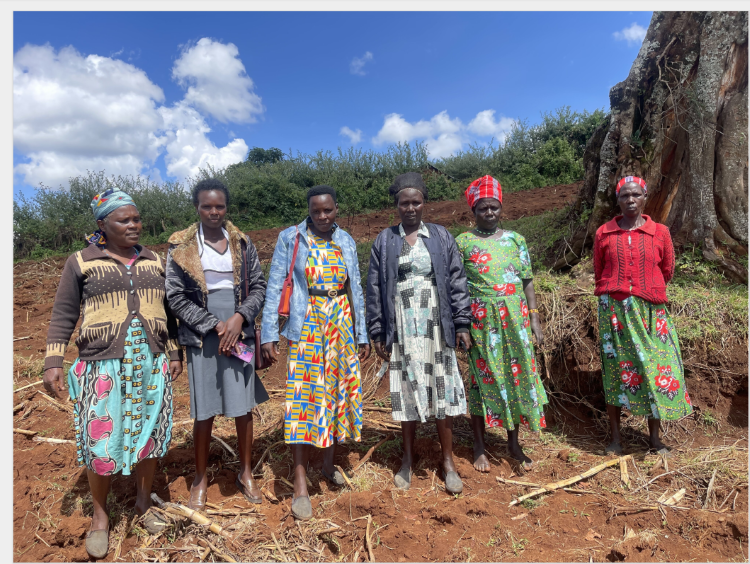
Some of the members of the Benet Mosop group photo by Diana Taremwa Karakire
One sunny day in September, I visited the group in Benet Sub-county. They had gathered in the middle of a small field, speaking in hushed voices. The group has also selected about a dozen leaders to spearhead their fight against years of abuse, mistreatment, and marginalization since they were uprooted from their ancestral lands inside the national park.
“We have to be on the lookout for park rangers who are always plotting to confiscate our cattle,” says Rael Kokop, a 68 –year old mother who has spent the past 20 years fighting to rebuild her cattle herd. “I used to have more than 60 herds of cattle, I am now left with around 10 ”
Scovia Chelangat, the chairperson says that the group brings together 50 women with the aim of working together to protect their rights and address multiple challenges faced by women in their community.
“Our strength lies in collective effort.The women know that they can count on each other whenever something happens,” says Chelangat.
One day in 2024, the women , woke up to destroyed farmlands, slashed cabbage gardens, and burnt out millet fields.UWA guards had wreaked havoc on their fields accusing them of trespassing onto the park boundary. Several trucks carrying gun-trotting park rangers had also been deployed to quell any form of protest from the community.Two days later the women’s group staged a sit-down protest occupying the UWA offices and demanded compesation for their loss.Aside the peaceful protests, the group has also been advocating for their rights by writing petitions to government leaders, creating songs that highlight their grievances, and sharing their plight on radio talk shows.
The women’s group has also been reforesting the mountain slopes by planting indigenous fruit and medicinal trees.These activities not only ensure food security of their families and wider community but also mitigate the risk of floods and landslides that are common in the Mt.Elgon area although these efforts are sometimes disrupted by UWA rangers, who reportedly uproot the trees.
“We are responsible for feeding our families, a midst these difficult conditions,” says Monica Manoba, a member of the group.However ,taking part in these advocacy efforts has come with its own challenges for some members.Manoba says that some of their members have received death threats via phone calls and text messages.
Samuel Amanya, the manager of the Mt. Elgon Conservation Area, says that the Benet have failed to recognize and respect the boundaries of the gazetted area by persistently grazing in the park, cultivating and engaging in hunting activities. “Several engagements with community members has fallen on deaf ears that’s why we resorted to imposing fines,” says Amanya “We are only trying to preserve the park and its species just like Kenya is doing on it’s side of the park”
Bashir Hangi, the spokesperson for UWA insists that the agency will continue to fight to preserve the national park, despite protests from locals. He scoffs at accusations of rights abuses from the locals. “We are doing our mandate,” he told Indigenous Times “Certainly people want land which we cannot give them because we don't have that authority. Our duty is to protect that national park.”
However, some conservation actors say that Ugandan authorities are motivated by tourism proceeds to clamp down on defenceless Benet people. Tourism is Uganda's largest foreign revenue earner, racking in some $1.1 billion last year, well ahead of any other single export. The government says the target is to increase this to $ 5 billion by 2028.
Other groups are pushing for a more just approach and speaking out on the injustices committed against Indigenous peoples in the name of conservation. Groups like the Minority Rights Group have become key voices in highlighting these abuses.
Kabajungu,says that UWA has long relied on a colonial-era approach known as fortress conservation, which has fuelled widespread violations of the rights of Indigenous communities who have lived for generations in forests and protected areas, including the Benet and the Batwa in southwestern Uganda.
She notes that these communities continue to face evictions, harassment, and even violence. In some cases, residents are arrested or shot for “poaching” when they are simply trying to feed their families,while trophy hunting for wealthy tourists is still permitted. Transforming conservation to respect Indigenous land rights, she argues, would benefit both people and nature.
Uganda’s fortress conservation model dates back to the 19th century, introduced under British colonial rule through the creation of protected areas and game ordinances that restricted local access to land and resources, often through mass evictions. The model assumes that humans inherently harm nature and therefore prioritizes strict regulation or total exclusion of people from protected areas. This approach has led to decades of violent, militarized enforcement and significant conflict between conservation authorities and local communities.
“ UWA needs to work toward decolonizing conservation and engaging Indigenous communities as equal partners,” says Byaruhanga.He explains that the fortress conservation model undermines both sustainable conservation and community development.“It’s time to go back to what works,” says Byaruhanga.
According to the UN indigenous peoples and local communities are custodians of more than a third of the world’s most important areas for biodiversity. In fact,42% of land world wide that is managed or owned by indigenous people , ecosystems are healthier and biodiversity is even higher than in protected conservation areas.
“Indigenous communities play a critical role in the conservation of biological diversity. Their traditional knowledge can enrich scientific information and conservation activities,” says Dr Behangana Mathias a conservation biologist at Makerere University.


-ebRIoHCASq.jpg)
Write a Response