

Ugandan farmers sue UK-registered EACOP company in landmark climate case
- Posted on July 7, 2026
- Latest News
- By Admin
- 150 Views
Ugandan farmers have filed a lawsuit in the High Court of England against a UK-registered company building the 900-mile oil pipeline to the Indian Ocean port city of Tanga, in what lawyers describe as a first-of-its-kind attempt to apply Ugandan climate, environmental, and constitutional law in a foreign court.
KAMPALA, Uganda
By Diana Taremwa Karakire
Ugandan farmers have filed a lawsuit in the High Court of England against a UK-registered company building the 900-mile oil pipeline to the Indian Ocean port city of Tanga, in what lawyers describe as a first-of-its-kind attempt to apply Ugandan climate, environmental, and constitutional law in a foreign court.
The suit, filed today against East African Crude Oil Pipeline company EACOP, seeks to prevent the pipeline from becoming operational and could have significant implications for Uganda’s plans to start shipping as much as 230,0000 barrels-a-day of crude to energy-hungry global markets later this year.
The farmers argue that EACOP has breached Uganda's legal protections for people, the environment and the climate by enabling the extraction and transport of oil that will worsen climate change.They are supported by Leigh Day, a London-based firm known for environmental and public interest litigation.
One of the farmers, Rachael Tugume, a mother of two from Hoima district, along Uganda’s western border with the Democratic Republic of Congo, said the pipeline project has already devastated her family's livelihood. Tugume said she depended on a small piece of land inherited from her father, where she grew cassava, beans, bananas and other crops that fed her family and generated income for eight years. She said EACOP acquired the land but the compensation she received was too little to rebuild her life.
"What we lost was more than just a garden. It was our only source of food and livelihood," Tugume said. “Our case should be heard in the UK so that we get justice"
The farmers are asking court to issue an injunction preventing oil from being transported through the pipeline.Their claims rely on Uganda's National Climate Change Act of 2021, the National Environment Act of 2019 and constitutional provisions guaranteeing the right to a clean and healthy environment.
Another farmer, Samuel Abedilembe, said EACOP acquired 42% of his farm, leaving him with too little land to support his family. He said compensation was insufficient to purchase an equivalent piece of land elsewhere and as a result he now has less land to support his family and has lost income from farming.
"How does EACOP expect me and my family to survive?" Abedilembe said. "The project has taken our land, disturbed the wild animals and changed the place we depend on every day."
If successful, the lawsuit could create legal uncertainty for the $5 billion project before first oil, expected in late 2026.
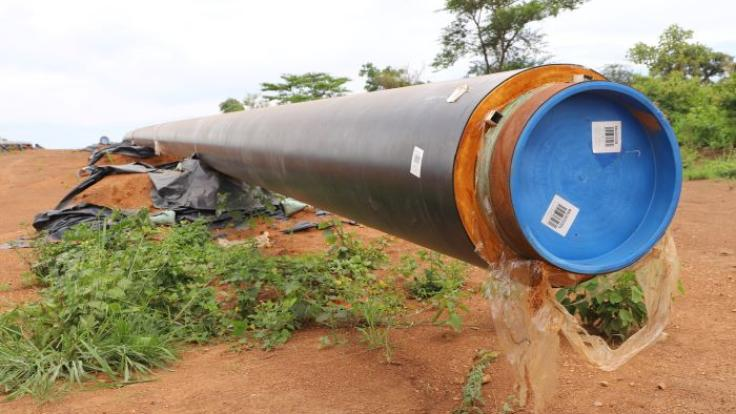
The 1,443-kilometer heated pipeline is designed to transport crude oil from Uganda's Lake Albert oilfields to the Tanzanian port of Tanga for export.TotalEnergies is the majority owner of the project, which also includes stakes held by China's CNOOC and the governments of Uganda and Tanzania.EACOP Ltd has previously said it is complying with all applicable laws and regulations granted by the Ugandan and Tanzanian governments.
“EACOP will lead to a huge amount of oil being burnt, in a world where the UN has confirmed there are already far more fossil fuels slated for extraction than required if we are to meet the goals of the Paris Agreement. The fact that the pipeline is operated and financed by a UK-registered company highlights the role UK corporates often have in fossil fuel extraction projects in the Global South.” Joe Snape, Leigh Day said in a statement.



Write a Response