

China’s Rush for Critical Minerals in Africa is Harming Local Communities and Environment
- Posted on June 25, 2026
- Latest News
- By Admin
- 197 Views
As China and other global powers sink investments to exploit Africa’s vast critical minerals needed to power the green energy transition, some countries are increasingly bearing the environmental cost, health risks and social disruptions of the mineral rush.
By Taremwa Diana Karakire
As China and other global powers sink investments to exploit Africa’s vast critical minerals needed to power the global green energy transition, some countries are increasingly bearing the environmental cost, health risks and social disruptions of the mineral rush.
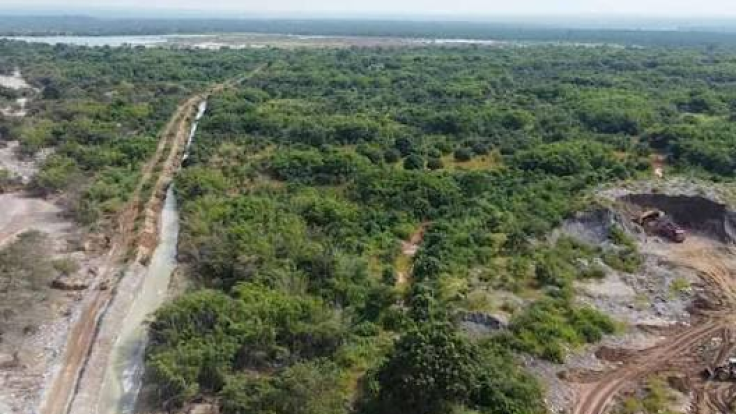
Early this month 3 June, Zambia’s Supreme Court heard an appeal by, China-state-owned giant, Sino Metals Leach Zambia Ltd, operator of the Chabishi copper mine. The appeal stems from the collapse of multiple tailings dams at the mine last year, releasing what is now said to be up to 900,000 metric tonnes of toxic effluent into the Chambishi Stream, Mwambashi and Kafue River system near the northern city of Kitwe.A lower court had earlier cleared the way for 176 community members to proceed with environmental and constitutional claims against the company. Sino-Metals Leach Zambia mine is a subsidiary of China Nonferrous Metal Mining Group, which the Chinese government owns.
The Supreme Court directed that the Government of Zambia be joined to the proceedings as a party before the appeal could be heard, as custodian of the public interest and because the issues raised extend beyond the parties directly involved. Significantly, the court observed that environmental harm often has long-term consequences and that the full effects of such harm may not become apparent until a decade or more after the event
Sino Metals had initially reported that only 50,000 tonnes of waste material had spilled into waterways that connect to the Kafue River,poisoning one of the country’s most important waterways.But a South Africa-based environmental company Drizit that was contracted by Sino-Metals to investigate the extent of the spill found that the disaster resulted in the release of 1.5 million tonnes of toxic material.After its two-month investigation, Drizit said approximately 900,000 cubic metres of toxic tailings were still present in the environment.These scientific studies identified arsenic, uranium and other toxic substances posing risks of chronic illness and cancer to people that depend on this environment.
According to local reports, some of the affected people now petitioners, were required to accept payments ranging from as little as $100, on condition they agreed never to talk about the spill or take legal action against Sino Metals and were not shown the amount they would receive until after they had signed.
Global demand for critical minerals needed for electric vehicles, batteries, and renewable energy technologies continues to surge and China has gained a dominant position in Africa’s critical minerals sector through long-term investments in mining and refining capacity of the continent’s vast reserves of cobalt, lithium and copper.
In recent years, Chinese mining companies have taken control of Botswana's Khoemacau copper mine, Mali's Goulamina lithium mine, and Tanzania's Ngualla rare earth project. Chinese electric vehicle giant BYD has gone even further, securing interests in six African lithium mines to guarantee supplies for its growing battery business through 2032.But this aggressive pursuit of critical minerals is uprooting local communities leaving a growing environmental and human cost across Africa's mining regions.
In November 2025, authorities in the Democratic Republic of the Congo suspended operations at Congo Dongfang International Mining CDM, a subsidiary of Zhejiang Huayou Cobalt, after a containment dam failed, releasing industrial effluents and several million cubic meters of electrolytes into multiple neighbourhoods of Lubumbashi. The spill flooded hundreds of homes in Kasapa, Kamisepe, and Kamatete, contaminated well water, and caused fish deaths, prompting residents to flee. Early assessments by the government found water heavily contaminated with lead, arsenic, and other toxins, alongside biodiversity loss. Environmentalists and prior NGO reports also documented long-standing pollution issues linked to CDM facilities.
According to the International Energy Agency, China now controls over half of global critical minerals production and an estimated 87 percent of processing and refining. China also produces nearly 70 percent of rare earth minerals, manufactures 93 percent of high-strength rare earth permanent magnets, and is responsible for 95 percent of the necessary heavy processing of critical minerals.

-H8I5c3mqSC.jpg)
Write a Response